In the vast expanse of Minnesota’s border, where the land meets the sky and the occasional deer decides to play hide and seek, Black Hawk helicopters swoop in like the superheroes of the skies. These mighty machines aren’t just for flashy air shows; they play a crucial role in border patrol, ensuring safety and security while looking undeniably cool.
Overview of Black Hawk Helicopters
Black Hawk helicopters play a crucial role in Minnesota’s border security efforts. These aircraft enhance surveillance and response capabilities in the region.
History and Development
The development of Black Hawk helicopters began in the 1960s, driven by the need for advanced utility helicopters. Sikorsky Aircraft designed the UH-60 Black Hawk for the U.S. Army. Its first flight occurred in 1974, and it entered service in 1979. Continuous upgrades have improved performance and versatility. The aircraft has also been adapted for various missions, including medevac and search-and-rescue operations. Its robust design and advanced technology make it a favorite for law enforcement.
Key Features and Capabilities
Black Hawk helicopters exhibit several key features that enhance their operational effectiveness. They achieve speeds of up to 183 knots and can carry up to 11 troops or tons of cargo. Equipped with advanced avionics, these helicopters provide superior situational awareness. The aircraft can operate in challenging weather conditions, ensuring mission success. Additionally, Black Hawks feature self-defense systems, enhancing crew safety. Their flexibility allows for configurations supporting both armed and unarmed missions.
Role of Black Hawk Helicopters in Border Patrol
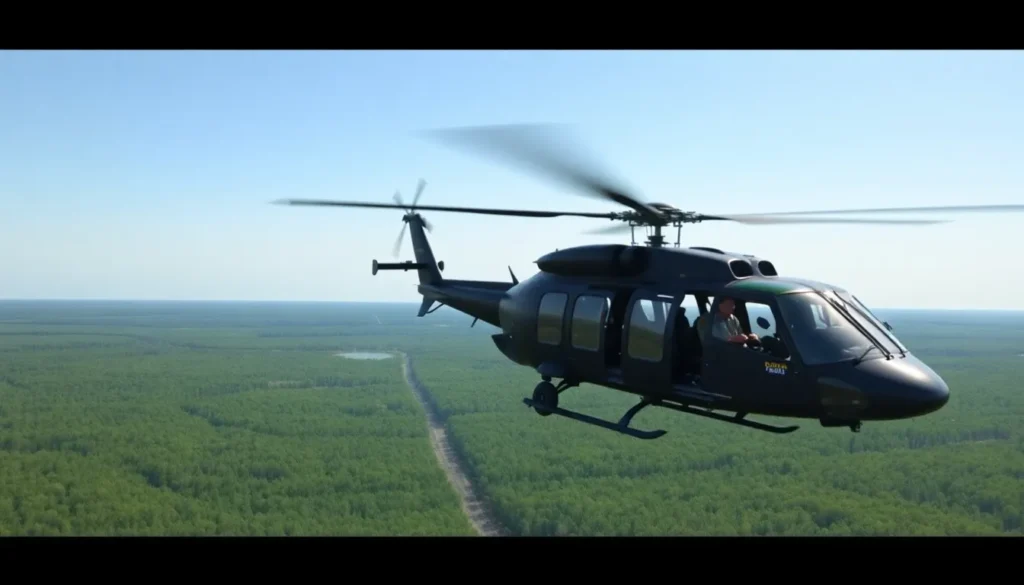
Black Hawk helicopters play a crucial role in border patrol operations in Minnesota. Their advanced capabilities enhance mission effectiveness in various scenarios.
Surveillance and Reconnaissance
Surveillance tasks benefit significantly from Black Hawk helicopters. Equipped with high-tech sensors, these aircraft can monitor vast areas quickly. Infrared cameras and radar systems contribute to identifying potential threats or unlawful activities along the border. Helicopters may hover silently, providing invaluable live data to ground units. During nighttime operations, these features enhance visibility and accuracy. Additionally, they gather intelligence crucial for planning and executing border security strategies.
Support for Ground Operations
Support for ground operations is a vital function of Black Hawk helicopters. Rapid transportation of personnel and equipment occurs thanks to their speed and payload capacity. Ground units receive timely reinforcement when responding to incidents, enhancing operational effectiveness. Helicopters serve as aerial command centers, relaying real-time information to team leaders. Whether delivering supplies or assisting in evacuations, their versatility ensures that ground operations run smoothly. This integration boosts coordination between air and land resources, ultimately improving overall mission success.
Case Study: Minnesota Border Patrol
Black Hawk helicopters play a vital role in Minnesota’s border patrol, significantly enhancing operational capabilities. Their advanced technology and versatility allow for effective monitoring and quick response to emerging threats.
Operations and Missions
Operations vary widely, utilizing Black Hawk helicopters for surveillance, reconnaissance, and rapid transport. Surveillance missions often deploy high-tech sensors, including infrared cameras, enabling efficient monitoring across extensive areas. Reconnaissance plays a crucial part in identifying unauthorized crossings, providing actionable intelligence to ground teams. Rapid transport capabilities ensure timely delivery of personnel to critical areas, bolstering response efforts. Helicopters support both armed and unarmed missions, adapting easily to specific operational needs. Additionally, they function as aerial command centers, relaying real-time updates vital for coordinating land and air resources.
Collaborations with Local Law Enforcement
Collaborative efforts with local law enforcement agencies enhance border patrol effectiveness. Partnerships streamline the coordination of resources, ensuring seamless communication between ground teams and helicopter units. Joint missions capitalize on the strengths of both aerial surveillance and community-based reporting. Local law enforcement benefits from immediate access to real-time data, improving incident response times. Working together, these agencies tackle issues like human trafficking and drug smuggling more effectively. The synergy between air support and local law enforcement fosters a more secure environment for Minnesota’s communities.
Benefits of Utilizing Black Hawk Helicopters
Black Hawk helicopters offer significant advantages for border patrol operations in Minnesota. Their advanced technology enhances overall mission effectiveness.
Enhanced Situational Awareness
Advanced sensors equipped on Black Hawk helicopters provide invaluable data. Infrared cameras and radar systems enable quick monitoring of extensive areas. They gather real-time information, significantly aiding ground units. Nighttime operations benefit from the helicopters’ ability to hover silently, allowing them to identify potential threats ahead of ground patrols. The integration of high-tech avionics promotes superior situational awareness, ensuring that personnel remain informed and prepared.
Rapid Response and Mobility
Fast response times hinge on the mobility offered by Black Hawk helicopters. Capable of transporting personnel and equipment swiftly, they provide immediate reinforcement during critical situations. Ground teams rely on aerial support, which facilitates timely updates and directions. Configurable for various mission types, these helicopters adapt to rapidly changing scenarios. Their versatility shines through in emergency situations, significantly improving operational efficiency and response effectiveness across Minnesota’s border patrol missions.
Challenges and Limitations
Black Hawk helicopters play a vital role in Minnesota’s border patrol, yet several challenges and limitations impact their effectiveness.
Maintenance and Operational Costs
Operational sustainability requires ongoing maintenance and substantial financial investment. Budget allocations often dictate the frequency of maintenance checks, impacting helicopter readiness for missions. Routine inspections, repairs, and upgrades can incur costs that reach thousands of dollars per aircraft annually. With the high demand for these helicopters, the financial burden on local agencies can strain resources. Training personnel also carries financial implications, necessitating funds for skilled operators and technicians. Meeting these costs while maintaining operational capability poses a significant challenge to agencies relying on Black Hawk helicopters for border security.
Regulations and Environmental Considerations
Regulatory constraints govern the operation of Black Hawk helicopters, impacting mission flexibility. Adherence to safety and federal guidelines is non-negotiable, ensuring safe operations but potentially limiting deployment. Environmental considerations also play a crucial role, as noise pollution and wildlife disruption must be accounted for during flights. Engaging with local communities to address environmental concerns forms an essential part of operational planning. Balancing mission objectives with regulatory compliance and environmental responsibilities can complicate the strategic deployment of helicopters in border patrol operations.
Black Hawk helicopters play a pivotal role in enhancing Minnesota’s border patrol operations. Their advanced technology and versatility enable effective surveillance and rapid response to various challenges along the border. By integrating high-tech sensors and providing real-time data, these helicopters significantly improve situational awareness for ground units.
Despite facing challenges like maintenance costs and regulatory constraints, the effectiveness of Black Hawks in law enforcement remains undeniable. Their ability to adapt to diverse mission types not only strengthens border security but also fosters collaboration with local agencies. As Minnesota continues to navigate complex border issues, the strategic deployment of Black Hawk helicopters will remain essential for ensuring safety and security in the region.